EU Commissioner Olivér Várhelyi has warned that Europe cannot claim to welcome Jewish communities while placing restrictions on fundamental Jewish religious practices, amid controversy in Belgium over the practice of brit milah, or circumcision, jewishbreakingnews reports
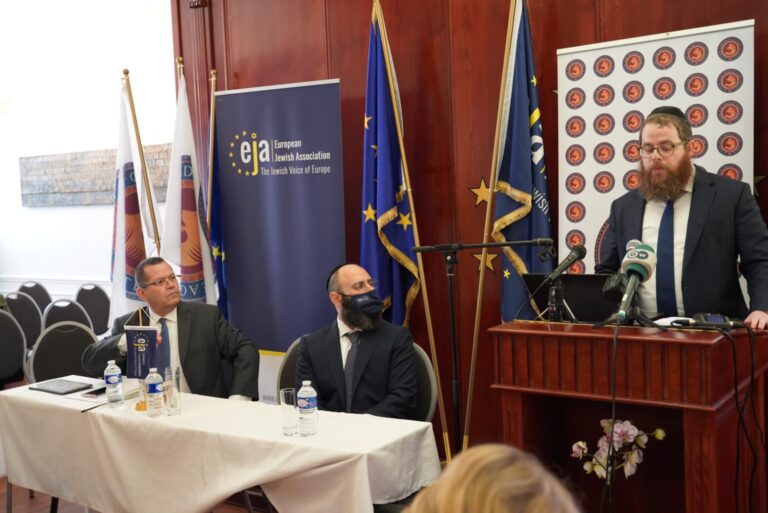
Speaking at a Rosh Hashanah event organised by the Conference of European Rabbis (CER) in Brussels, the European Commissioner for Health and Animal Welfare stressed that protecting Jewish life requires more than ensuring physical security.
„Europe cannot say that Jewish life belongs here, while making it increasingly difficult, if not impossible, to live a full Jewish life here,” Várhelyi said. „Jewish traditions and Jewish religious practice must be therefore respected and protected.”
His comments come amid concern over legal action against three men in Belgium accused of performing brit milah unlawfully. Under Belgian law, circumcision is subject to medical requirements that can conflict with the traditional role of a mohel, the person trained according to Jewish religious practice to perform the procedure.
For observant Jews, brit milah is a fundamental religious obligation dating back thousands of years and is traditionally performed on a Jewish boy on the eighth day after birth.
The Belgian case has therefore prompted concern among Jewish leaders and international officials that restrictions could make traditional Jewish religious life increasingly difficult in the country.
Várhelyi also addressed the wider problem of antisemitism and religious extremism in Europe, referring to proposals from CER President Chief Rabbi Pinchas Goldschmidt for confronting extremist ideologies that encourage violence against Jews.
„There is no justification for intimidation or violence. No Jew in Europe should ever have to choose between being visibly Jewish and feeling safe,” Várhelyi said.
But he argued that security alone is insufficient.
„Belonging is much more than about security,” he said. „It must be that Jewish life has a future in Europe. A future lived openly, confidently and proudly.”
The Belgian proceedings have also drawn criticism from Israeli Foreign Minister Gideon Sa’ar and US Ambassador to Belgium Bill White.
Sa’ar accused Belgium of using criminal law against Jews for practising their religion, describing the case as „a scarlet letter on Belgian society.”
White similarly warned that the controversy risked damaging Belgium’s international reputation, saying: „Belgium will be thought of now as antisemitic by the world. Until this is resolved — there is no way around it.”
Critics have placed the dispute within the broader history of European restrictions on Jewish religious observance. Circumcision and shechita, the Jewish method of religious slaughter, have repeatedly been targeted by governments hostile to Jewish communities. The Nazi regime prohibited shechita in Germany shortly after coming to power in 1933.
Belgian regions have already introduced prohibitions affecting traditional kosher slaughter, making the latest controversy over circumcision particularly concerning to Jewish religious leaders.
The investigation into the three men reportedly began after a complaint from Moshe Aryeh Friedman, an anti-Israel activist who has previously campaigned for restrictions on other practices within Haredi Jewish communities.
For Várhelyi, the broader issue is whether Jews can continue to practise their religion fully and openly in Europe. His remarks reflect a concern increasingly voiced by European Jewish leaders: that protecting Jewish communities from violence is essential, but preserving Jewish life also requires safeguarding the religious practices that allow those communities to remain Jewish.
 More News