German federal prosecutors have charged seven people accused of building a Hamas-linked terrorist network in Europe and preparing attacks against Jewish, Israeli and pro-Israel targets in Germany and Austria, ynetglobal reports
Investigators allege that the network accumulated 13 pistols, an automatic rifle and more than 700 rounds of ammunition, transferred weapons across national borders and even prepared a video claiming responsibility for a planned attack in Hamas’ name.
The indictment represents a major development in an investigation that began publicly in autumn 2025 and subsequently expanded across several European countries.
According to German prosecutors, Hamas’ military wing, the Izz ad-Din al-Qassam Brigades, began establishing weapons stockpiles in Europe before a more specific attack plan started to develop in July 2025.
Investigators believe the alleged attack was intended to take place around the second anniversary of the Hamas-led 7 October 2023 massacre in Israel, in early October 2025.
Potential targets allegedly included Israeli representatives, Jewish people and individuals regarded as supporters of Israel. German media have also reported that Jewish community institutions and pro-Israel demonstrations were considered as possible targets.
By the time German authorities arrested three suspects in Berlin on 1 October 2025, prosecutors say members of the network had access to an automatic rifle, 13 pistols and more than 700 rounds of ammunition.
One person allegedly transported part of the arsenal to Vienna, where the weapons were concealed in a cache. Austrian authorities subsequently discovered a Hamas-linked weapons stockpile in the city in November 2025.
German investigators already suspected at the time that the weapons discovered in Austria were intended for attacks against Jewish and Israeli targets in Europe.
Another suspect, arrested in Britain, allegedly prepared a video in advance claiming responsibility for the planned attack on behalf of Hamas.
Federal prosecutors regard the existence of the video as significant evidence that the alleged network had progressed beyond simply collecting weapons for possible future use and was moving towards preparations for a specific terrorist attack.
The investigation portrays what prosecutors describe as a cross-border Hamas infrastructure operating within Europe. Weapons and ammunition were allegedly acquired in Germany and elsewhere before some firearms were moved into Austria, demonstrating that an attack did not necessarily have to take place in the same country where the weapons were obtained.
One of the most controversial aspects of the case concerns Mohammad S., a Lebanon-born resident of Berlin who was reportedly working as a source for Germany’s domestic intelligence service while allegedly assisting members of the suspected Hamas network.
According to an investigation by German newspaper Die Zeit, Mohammad S. was a source for the Federal Office for the Protection of the Constitution (BfV), Germany’s domestic intelligence agency.
At the same time, prosecutors suspect him of helping supply ammunition to members of the alleged terrorist network.
According to Die Zeit, after members of the group lost some of their ammunition, Mohammad S. helped them acquire approximately 300 rounds for around €1,050. Authorities arrested him in January 2026.
The BfV subsequently confirmed that Mohammad S. had worked as a source for the agency. However, it said the intelligence service had never tasked or instructed him to take any action connected with the alleged terrorist plot.
The revelation has raised questions in Germany about how an individual working as an intelligence source could allegedly have become involved in supplying ammunition to members of a suspected Hamas network.
The case has also prompted questions in the German parliament about whether Israeli intelligence played a role in uncovering the alleged plot.
In August, the German government said it could neither confirm nor deny whether Israel’s Mossad intelligence agency had warned the BfV about the suspected attack preparations or whether information supplied by Israel had identified Mohammad S.
The government cited the intelligence-sharing principle known as the Third Party Rule, under which information received from a foreign intelligence agency cannot normally be disclosed without that agency’s permission.
The investigation has expanded considerably since authorities arrested the first three suspects in Berlin in October 2025.
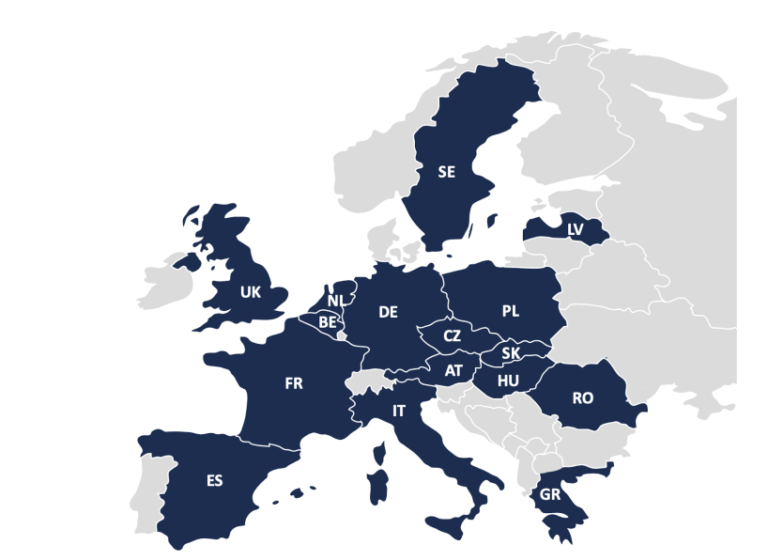
Authorities subsequently detained additional suspects in Britain, Denmark, Cyprus and elsewhere in Europe. Prosecutors say nine people have now been arrested in connection with the investigation, with seven indicted before a higher regional court in Berlin.
The seven defendants hold German, Danish, Bulgarian and Lebanese citizenship.
They face charges including membership in a foreign terrorist organisation, preparing a serious act of violence threatening state security and firearms offences. Some defendants also face allegations of violating German legislation governing weapons of war.
The case comes amid broader concerns about Hamas establishing operational infrastructure outside the Middle East.
A study by the Combating Terrorism Center at the United States Military Academy at West Point concluded that Hamas had spent years establishing weapons caches in Europe and preparing for the possibility of conducting attacks outside Israel and the Palestinian territories.
The study found that developments following the 7 October massacre had increased concerns that Hamas could seek to expand its operational activities in Europe.
German prosecutors allege that the network uncovered in the current investigation had progressed significantly beyond maintaining weapons for hypothetical future use.
According to the indictment, the suspects had access to firearms and hundreds of rounds of ammunition, transferred weapons between European countries and allegedly prepared a video claiming responsibility for an attack before it had taken place.
The allegations have particular significance for European Jewish communities because prosecutors say Jews and Jewish institutions were among the potential targets. If proven, the case would demonstrate how antisemitic terrorism linked to the Middle East can develop into a cross-border security threat inside Europe, targeting Jewish people and institutions because of their identity or perceived connection with Israel.
Photo credit: REUTERS/Heiko Becker
 More News