

A 43-year-old woman was injured in an antisemitic attack in central Berlin after two men allegedly targeted her for wearing a Star of David necklace, subjected her to anti-Jewish abuse and attacked her with a broken glass bottle, Times of Israel reports
The assault comes amid continuing concern about the high level of antisemitic harassment, threats and violence facing Germany’s Jewish community.
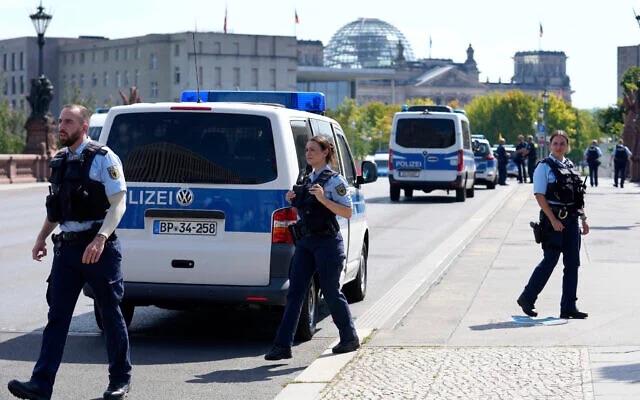
Berlin police said the attack took place at approximately 2.30am on Friday on Torstrasse in the central Mitte district.
According to police, two men approached the woman and confronted her because she was wearing a Star of David necklace. They then directed antisemitic insults towards her.
One of the men allegedly attacked her with a broken glass bottle. The woman attempted to protect herself and suffered several cuts to her hand while defending herself.
Emergency services took her to hospital for treatment. Authorities did not provide further information about her condition.
German newspaper Bild reported that both suspects fled following the assault and apparently remained unidentified as of Saturday. No arrests had been announced.
The attack highlights continuing concerns about the safety of Jews who visibly display their identity in Germany. Antisemitism has remained at persistently high levels since the Hamas-led massacre in southern Israel on 7 October 2023 and the subsequent war.
The Federal Association of Departments for Research and Information on Antisemitism (RIAS) reported in May that many Jewish people in Germany now avoid displaying religious or Jewish symbols or speaking Hebrew openly because of fears of harassment, intimidation and violence in public.
Figures published by the J7 Task Force in July further illustrated the scale of the problem. The organisation, which represents major Jewish communities across seven countries, reported that Germany recorded 8,725 antisemitic incidents during 2025.
This represented an increase of 215 percent over five years and, according to the report, gave Germany the highest per capita rate among the countries examined, with almost 70 recorded incidents for every 1,000 Jewish residents.
Researchers identified antisemitic activity originating from different ideological sources, including the far right and far-left anti-imperialist movements. They also warned of an accelerating decline in knowledge and awareness of the Holocaust, particularly among younger generations.
The Berlin assault occurred during a week in which several other developments underlined concerns about antisemitism and threats against Jewish people in Germany.
On Friday, German federal prosecutors charged seven suspected Hamas members over an alleged terrorist network that prosecutors say was preparing attacks against Jewish, Israeli and pro-Israel targets in Germany and Austria. The alleged plot was intended to coincide with the second anniversary of the 7 October massacre.
German authorities also revealed that 93-year-old Holocaust survivor and Munich Jewish community leader Charlotte Knobloch had received a death threat referencing the recent electoral success of the right-wing Alternative für Deutschland (AfD).
The attack in Berlin provides another stark example of how this wider climate can affect Jewish people in everyday public life. According to police, the victim appears to have been singled out specifically because she was visibly wearing a Jewish symbol, before being subjected to antisemitic abuse and physical violence.
The incident reinforces concerns raised by Jewish organisations that openly displaying Jewish identity in Germany can increasingly expose individuals to intimidation or attack — a situation that has led some Jewish residents to conceal symbols of their faith and identity in public.
Photo credit: AP Photo/Ebrahim Noroozi
 More News